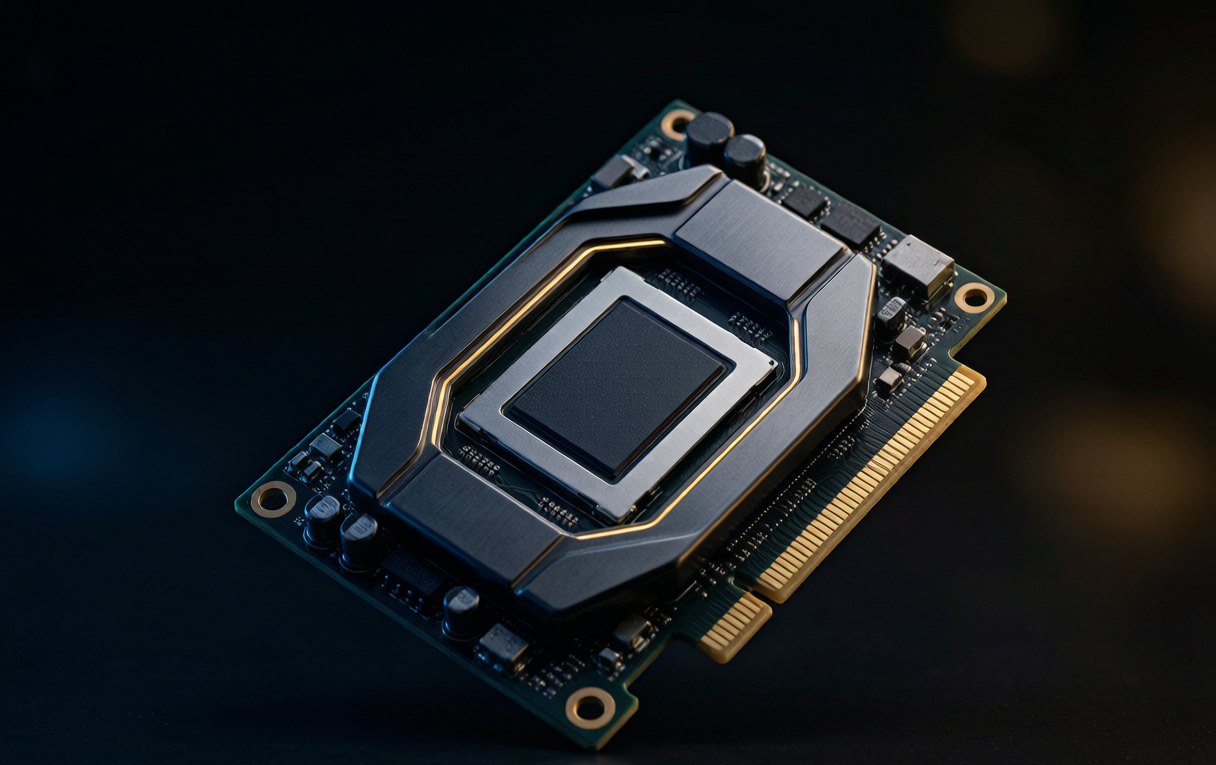
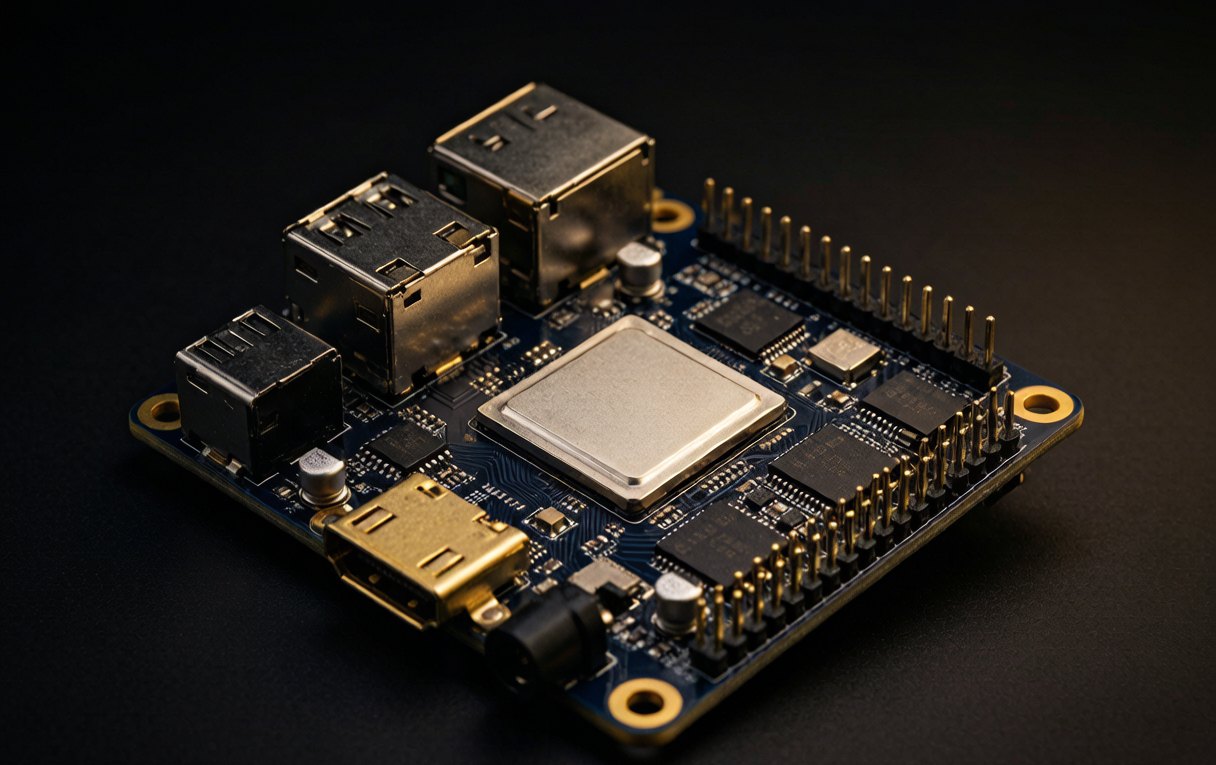
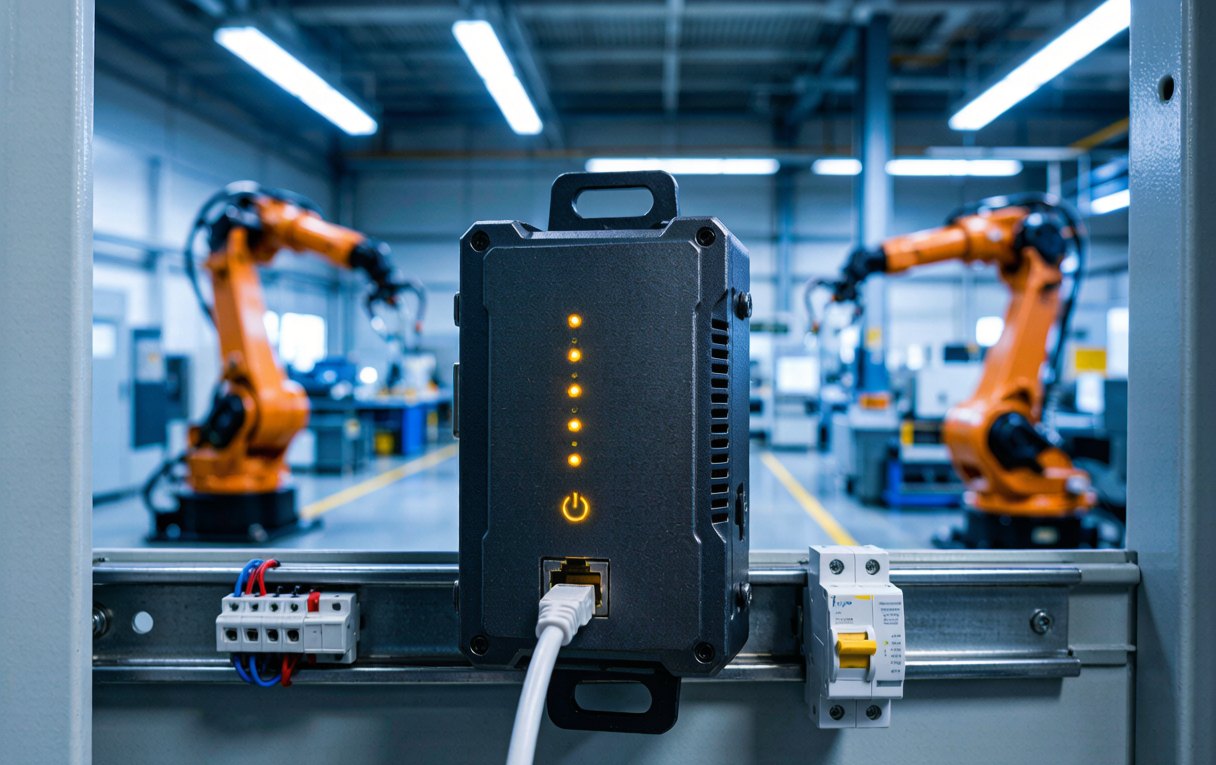
The most complete RISC-V product portfolio. WCH QingKe MCUs from ultra-low-cost to industrial connectivity, SpacemiT K1 edge computing SoC, and K3 AI CPU with 60 TOPS. Hardware, software, and value-added services — all on open silicon.
Proprietary ISAs put one vendor in control of the roadmap, the pricing, and what you are allowed to inspect. RISC-V is an open standard with a frozen base specification — auditable, and second-sourcable.
RISC-V is an open, royalty-free ISA implemented by many silicon vendors. Second-sourcing does not require a firmware rewrite, so your roadmap is not tied to a single supplier.
The same ISA is produced by vendors across multiple regions. When lead times or allocation shift, you can qualify an alternate part without rebuilding your software stack.
Every instruction is publicly specified and reviewable. No undocumented modes, no hidden microcode — security review and certification work against a published specification.
Add domain-specific instructions for AI, crypto, or real-time. ARM doesn't let you modify the ISA — RISC-V does.
A vendor-neutral ISA with a frozen base specification, maintained by RISC-V International. Silicon roadmaps outlive individual vendor product lines — suitable for 10-year lifecycle programs.
25% global processor market share in 2026. 69 billion RISC-V cores shipped. Production-ready.
From ultra-low-cost MCUs to 60 TOPS AI SoCs. One architecture, seven tiers, infinite possibilities.
WCH (Nanjing Qinheng) self-designed RISC-V cores. From the world's cheapest RISC-V MCU to industrial chips with Ethernet, CAN, BLE, and USB 3.0.
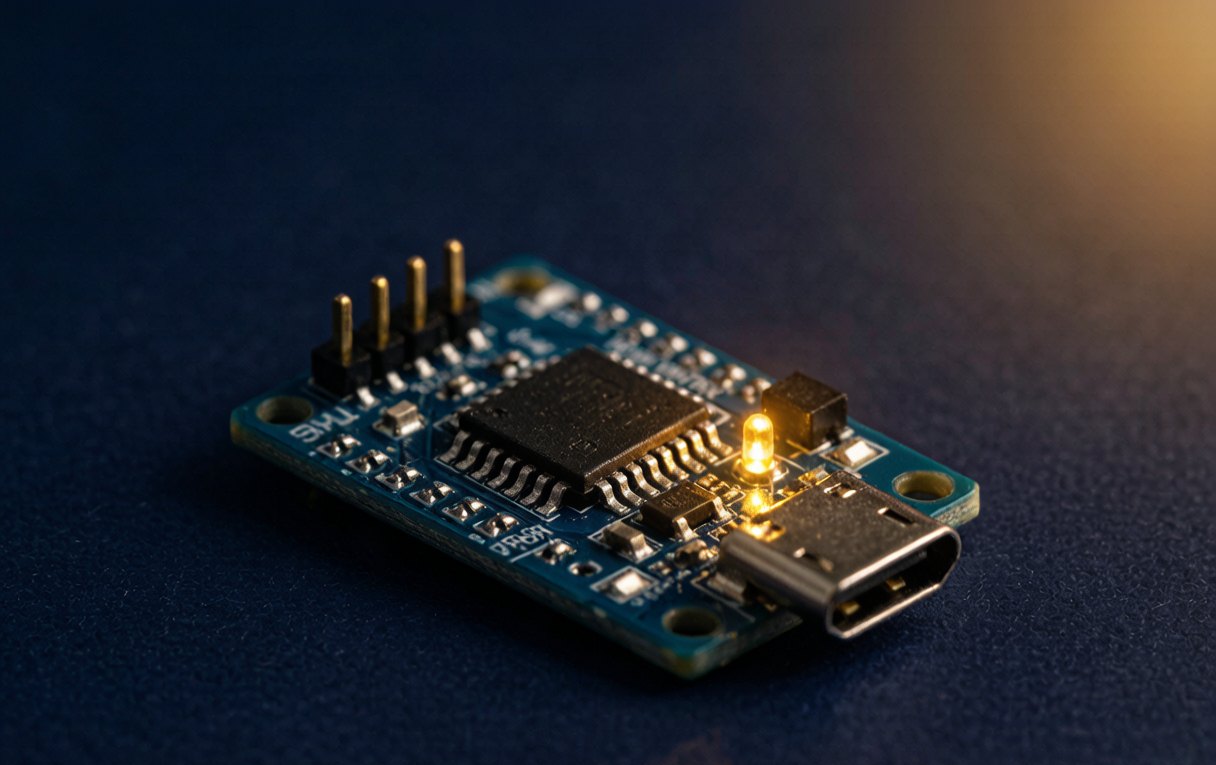
From edge networking to AI computing. SpacemiT Key Stone series delivers production-ready RISC-V SoCs with full Linux and OpenWrt support.
World's first RVA23-compliant RISC-V AI CPU. 8x X100 at 2.4GHz + 8x A100 — 60 TOPS. Runs 30B LLMs locally. Jetson Orin Nano pin-compatible. Ubuntu 26.04 LTS.
| CPU | 8x X100 @ 2.4GHz (4-issue OoO) |
| AI Cores | 8x A100 (60 TOPS) |
| DMIPS | 130,000 |
| LLM | 30B params local (>10 tok/s) |
| Memory | LPDDR5 up to 32GB (51GB/s) |
| Ethernet | 4x GMAC with TSN |
| PCIe | 8 lanes Gen3 |
| USB | 4x USB 3.0 + 1x USB 2.0 |
| Serial | 17x UART, 10x CAN-FD, 9x I2C |
| Display | Dual 4K@60 (DSI+DP) |
| Video | 4K@180fps dec, 4K@90fps enc |
| Camera | 4x MIPI-CSI (12 cam) |
| Security | SM2/3/4, AES, SHA, RSA, Secure Boot |
| Virtualization | RVH 1.0, AIA, IOMMU |
| OS | Ubuntu 26.04 LTS, Bianbu OS |
| TDP | 15-25W |
| Temp | -40C to 85C |
| Compat | Jetson Orin Nano pin-compat |
8-core X60 RISC-V at 1.6GHz with PowerVR GPU, 2 TOPS AI, and 8 gigabit Ethernet ports. Production-ready with OpenWrt 23.05.
| CPU | 8x X60 RISC-V @ 1.6GHz |
| DMIPS | 50,000 (50K DMIPS) |
| GPU | PowerVR BXE-2-32 |
| AI | 2 TOPS (NPU) |
| Memory | LPDDR4X up to 16GB |
| Ethernet | 2x GMAC (RGMII) |
| PCIe | 5x PCIe Gen2 |
| Serial | 12x UART, 2x CAN-FD |
| OS | OpenWrt 23.05, Linux 6.1 |
| Process | 22nm |
We don't just sell chips. We deliver complete RISC-V solutions from hardware design to deployment, certification, and long-term support.
Reference designs and custom PCBs
Board support packages and firmware
Custom manufacturing and branding
Global compliance assistance
Long-term supply guarantee
Engineering support & training
From network infrastructure to industrial automation — four deployments where RISC-V is shipping in production today.
Read the deployment breakdowns →
Network
Network operators need equipment they can audit end to end and keep in service for a decade. RISC-V gateways running OpenWrt give full-stack visibility — bootloader to application — with no opaque binary blobs.
Industrial
Multi-protocol industrial gateways connecting CAN, RS-485, Ethernet, wireless. RISC-V MCUs reduce BOM 60% vs ARM.
Run 30B LLMs locally without cloud. Privacy-preserving AI for robotics, smart home, content creation.
Open ISA enables full-stack research from RTL to applications. Ideal for university courses and architecture research.
Every product ships with complete open-source software support.
Full OpenWrt for K1 with mwan3, nftables, tc
Canonical officially supports K3. Bianbu OS available
Free IDE for all WCH RISC-V MCUs. Arduino Core support
Full RTOS for CH32V with rich driver ecosystem
Latest developments in the RISC-V ecosystem — from chip launches to market analysis.
Official documentation, application notes, and development guides for WCH QingKe MCUs and SpacemiT K-series SoCs.
Suzhou Ruixin's Gaoguang D35 entered mass production in June 2026: a fully self-developed RISC-V CPU core paired with a dedicated LPU dataflow processing unit, 128 GB on-chip VRAM, Chiplet advanced packaging, and a claimed >90% compute utilization. ISCA 2026 best-paper nomination. Qiyuan Robot partnership announced Sep 20. Five target scenarios: smart security, industrial inspection, embodied robots, autonomous driving, smart storage.
SpacemiT’s official K3 preprint (2026-01-29) annotated: X100 (OpenC910 lineage, TAGE, 17-cycle L2 hit, 7 VMs/core) and A100 (VLEN 1024, IME 1.0/2.0 matrix tiers, shared Tensor Core closed at 2.1 GHz), one SMP Linux with AI-partitioned cores, the ONNX Runtime + Triton stack, and every published benchmark table — SPEC CINT2006 22.88, −5.48% under KVM, GHASH 46.6×, 3.28× memory bandwidth. All figures vendor-published and labeled.
EVAS Intelligence's 64-node supernode — Epoch chips on E200-L liquid-cooled OAM modules in an orthogonal backplane-free ELink fabric — is now serving MoE traffic in a Shijiazhuang operator data center, backed by a new ~RMB 2B round at a ~RMB 15B valuation. Full deployment tables, MoE expert-routing mechanics, the gen-2 roadmap, and a strict vendor-claims vs verified-facts separation.
S2C mapped a quad-core AndesCore AX66 cluster (13-stage OoO, RVA23, RVH + AIA, CHI) onto a single AMD Versal Premium VP1902 in the Prodigy S8-100: 60 MHz, ~55% logic, Linux KVM with two VMs, and two TinyStories-42M LLMs running pre-silicon. Full AX66 spec tables from the official product page, what each demo layer exercises, and a bring-up checklist for RVA23 SoC teams adding custom extensions.
Alibaba MNN on SpacemiT K3: IME2 matrix extension, asymmetric W4B64 quantization, TCM double-buffer pipelining; Qwen3-0.6B hits 381 tok/s prefill, 54.49 tok/s decode. Build flag, benchmark commands and source-code map for running local LLMs on K3's A100 AI cores.
AMD ROCm 10.0 demoed on the BigSky SF-2U870 (32× P870-D head node + Radeon AI PRO R9700) running Gemma4-E2B at AI Infra Summit 2026. Full BigSky hardware spec tables, the ROCm demo software stack, and how the AMD path compares with NVIDIA’s CUDA port — plus what a RISC-V head node means for AI infrastructure economics.
Infineon’s Hot Chips 2026 automotive talk consolidated: the domain → zonal → central-compute E/E transition, Path A vs Path B zone controllers, MCU island + MPU island super-integration, RVI AUTO-SIG profiles (RV32E+I+M+U baseline), RVM virtualization for mixed criticality, and the three-architecture AURIX portfolio (TriCore + Arm + RISC-V). Full tables: workload timing spread, profile contents, and the ecosystem checklist.
EU CRA Article 14 went live on Sept 11, 2026 with a 24-hour early-warning clock for actively exploited vulnerabilities on every product with digital elements sold in the EU. This deep-dive walks RISC-V MCU & SoC vendors through scope, the 24/72/14-day reporting workflow via ENISA’s Single Reporting Platform, the €15M / 2.5% global-turnover penalty tier, the SBOM and security-by-design obligations that take full effect on Dec 11 2027, and a five-step engineering checklist VDP → SBOM → Annex VII file → conformity assessment → CE mark.
Read article →China’s earliest RISC-V CPU IP company files for BSE listing. NA900 is the world’s first RISC-V CPU IP certified to ISO 26262 ASIL-D. UX1030H targets RVA23 high-performance scenarios. 300+ customers, 87% gross margin, 4.85B cash, zero debt.
riscv64a23 TargetA snapshot of Rust’s RISC-V platform support as of September 2026: which targets are stable, which is new, and why the Tier 1 promotion RFC has been open since October 2024. Companion to the CPython Tier 3 article.
Three RISC-V server chips from the 5th Dishui Lake Forum cover compute, AI acceleration, and BMC management. Deep dive into BlueChip LX500, SpacemiT K3, and StarFive JH-B100.
RISC-V International’s Board approved the SJTU IPADS-led SPMP (Supervisor Physical Memory Protection) extension on Aug 31, 2026 after a seven-year campaign. SPMP replaces page-table walks with a small CSR “sticky-note” file for one-cycle physical-address range checks on M-mode and S-mode accesses. Shipping in XiangShan and Nuclei UX10/UX10B silicon; first ISA feature ever defined end-to-end by a Chinese team.
Suzhou Ruixin launches the first mass-produced RISC-V dataflow architecture physical AI chip. 128 GB memory, self-developed RISC-V CPU core recognized by Intel, ISCA 2026 best paper nominee. Dataflow computing eliminates program counters for deterministic low-latency inference in industrial intelligence, embodied AI, cockpit-driving integration, and 5G/AI-RAN communications.
Canonical at Hot Chips 2026: RVA23 baseline from Ubuntu 25.10, ~95% package parity with amd64, 55.1% test pass rate, Kubernetes/MicroCloud porting, and native RISC-V build farm on Scaleway with Alibaba and SpacemiT hardware.
GlobalFoundries-owned MIPS unveils three workload-native platforms: Acies for edge AI inference (open NPU), Actus for real-time embedded control (motion, sensor fusion), Aegis for mission-critical safety systems. Software-first design with class-leading tokens-per-watt. AMD and MediaTek endorse open-standard RISC-V.
CPython core developer Stan Ulbrych announced riscv64-unknown-linux-gnu as a PEP 11 Tier 3 platform. RISE Project provided real hardware buildbots. RISC-V is the only fully open ISA in CPython’s official support tiers. PyTorch 2.13.0 riscv64 wheels already land; 99.998% test-suite pass rate. Roadmap: pre-merge CI, then Tier 2 promotion.
Community benchmarks show the K1's X60 core achieving ~80 ms/token for Qwen2.5-0.5B in int4 format through ONNX Runtime, leveraging the IME (Integrated Matrix Extension) for MatMulNBits acceleration. A technical deep dive on RVV+IME kernel porting, block-wise quantization, and what this means for edge AI on RISC-V.
P100 is the first domestic dynamic SMT4 server-grade RISC-V CPU core: SMT1→SMT4 runtime switching with zero reboot, 20+ stage out-of-order pipeline, 8-decode / 10-issue superwide, TAGE branch prediction, >20/GHz single-core (SPEC CPU2006), hardware RAS auto-recovery. Test chip taped out Aug 2026 on domestic node; 128-core CPU 2027, MP 2028. Backed by Biren and other domestic GPU vendors for CPU+GPU co-design. Decode the microarchitecture, RAS strategy, agentic-AI workload modeling, and ecosystem implications.
NVIDIA published the exact platform contract a RISC-V host CPU must meet: RVA23, Boot & Runtime Services, ACPI 6.6, PCIe I/O coherence, and peer-to-peer. NVLink Fusion adds a ~88-lane C2C interconnect with CHI coherence, DOCA, and NCCL. SiFive named as first RISC-V NVLink Fusion CPU partner. Vera Rubin NVL72 rack shows the target architecture. Two generations to viable third server-CPU option.
32 server-class RISC-V cores + 16 integrated AI cores on the Contrail Compute 5000 Series, RVA23-compliant, RVV 1.0 + VME matrix extension, 4-channel DDR5-6400 up to 1 TB, 64-lane PCIe Gen5, CXL 2.0, RISC-V Hypervisor + IOMMU + AIA 1.0. Designed for the inference + RAG + agentic-AI era, not training. Full architecture, software stack, and reference server configuration.
Samsung 4 nm, 2 TB DDR5 + SSD-backed "Infinite Memory", PCIe 6 / CXL 3.2 x8 at 128 GB/s. 24 independent 128-core subsystems running at 1.1 GHz deliver ~3 TFLOPS for vector search, KV-cache, and near-data processing. Deep dive into the Hot Chips 2026 architecture, software stack (C/C++/Rust + Parallel Xceleration Library), and rack-scale reference design.
Nuclei N307 RISC-V core @ 160 MHz, integrated 2.4 GHz Wi-Fi 6 (802.11ax OFDMA + MU-MIMO) + BLE 5.2 radio with shared 2.4 GHz path, up to 4 MB Flash, 320 KB SRAM, hardware AES/DES/Hash/PKCAU/TRNG, Matter-over-Wi-Fi certified. QFN32/QFN40, -40 to 105 °C.
China’s first systematic RISC-V vehicle-control-chip standard launched at the Suzhou Automotive Summit. Headlining chip: CRV6 RISC-V + 0.3 TOPS NPU + ASIL-D + native PQC (ML-KEM/ML-DSA). Targets Infineon TC4Dx, Renesas U2A in central-domain and ADAS controllers.
SpacemiT K3 SoC in a Mini COM-E module: 8× X100 cores @ 2.2 GHz, 8× A100 AI cores with 60 TOPS, 30B LLM inference, -40 to 70°C industrial temp, 8× CAN-FD, 100% domestic supply chain. Full spec deep dive.
32 P870-D cores at 2.0 GHz, 256 GB DDR5-5600, PCIe Gen5, NVMe, and out-of-the-box Ubuntu 26.04 LTS / RHEL 10. Deep dive into the specs, CUDA/NVLink Fusion support, and what it means for RISC-V in the datacenter.
QingKe V4C RV32IMAC core integrates USB 2.0 full-speed, USB PD 3.0 and Type-C PHYs, a PIOC state-machine I/O controller, dual OPA, triple CMP, 12-bit ADC and 65 KB Flash — collapse any external PD trigger chip.
Andes' new VS Code plugin integrates the RISC-V toolchain, debugger, and MCP-based AI agent support. Cross-platform for Windows and Linux, with sample import and natural-language debug control.
A 15-stage deep-OoO, 6-issue, 256-entry-window RISC-V core targeting Arm Cortex-A78 at 15/GHz SPECint2006. RVA23-compliant with vector unit and Type 1/2 hypervisor — scalable to 256 cores per die.
USB 3.2 Gen1 (5 Gbps) to Gigabit Ethernet on a self-developed RV32IMAC RISC-V core. Pin-compatible, driverless, 1M units in 3 months.
480MHz RISC-V with FPU/DSP, integrated 150V half-bridge drivers, 4x CAN-FD, 2MSPS ADC, 9x9mm QFN80. Purpose-built for robot joint servo control and already in mass production.
2.5-inch Pico-ITX plus SBC built around the K3 RVA23 AI CPU. 10GbE SFP+, NVMe, dual M.2, 65W single-cable power, and industrial -40 °C to +85 °C options.
8x X100 @ 2.4GHz, 8x A100 AI cores, 60 TOPS, 130K DMIPS. First mass-production RISC-V chip with RVA23, 1024-bit RVV, native FP8, and full chip-level virtualization.
Elephant Robotics + SpacemiT K1 (8-core X60). On-device LLM inference (0.5-1B params, 10+ tokens/s), ROS2, full-stack open source from ISA to robot control code.
Deep dive into the XiangShan Kunming Lake open-source RISC-V core and the Ruyi native OS — China's push toward a self-evolving RISC-V hardware/software ecosystem.
WCH's first V5F-class flagship. Heterogeneous big.LITTLE: V5F 400MHz + V3F, built-in USB 3.2 Gen 1 5Gbps PHY (measured 450 MB/s), 100M Ethernet PHY, Type-C/PD, dual high-speed ADCs (5 Msps + 20 Msps).
12 RISC-V cores, 200 TOPS INT8, 128GB unified memory. A dataflow architecture chip that eliminates data搬运 bottlenecks in video generation and understanding.
SiFive's third-generation Performance P570 raises the bar for high-performance RISC-V processor cores with RVA23 ISA profile support and out-of-order execution.
From bare metal blink to USB device — everything you need to start with the world's cheapest RISC-V microcontroller.
The most connected RISC-V MCU from WCH. 480Mbps USB, 100M Ethernet, 8 UARTs, dual CAN, dual ADC — all on a QingKe V4F core.
From SDK download to custom firmware build — the complete guide to developing OpenWrt on the K1 RISC-V platform.
The world's first RVA23-compliant RISC-V chip in mass production. Deep dive into X100 cores, A100 AI engines, and what RVA23 means for software compatibility.
Complete walkthrough of MounRiver Studio — project setup, debugging, peripheral configuration, and tips for CH32V series development.
From Docker setup to model deployment — run ASR, vision, and LLM inference on the K1's 2 TOPS AI engine.
An honest assessment of where RISC-V stands against ARM in 2026 — where it's winning, where it's still behind, and what changed this year.
Practical guide: 8 serial ports, dual CAN, Gigabit Ethernet, and Modbus TCP/RTU conversion on a $3 RISC-V chip.
Evaluation boards, reference designs, engineering support. From prototype to production in weeks.
✉ contact@open-riscv.comWe reply within 24 hours.
Need production hardware instead of evaluation? MeToclaw industrial & IoT devices · BESTOM custom ODM · RISC-V tech blog